

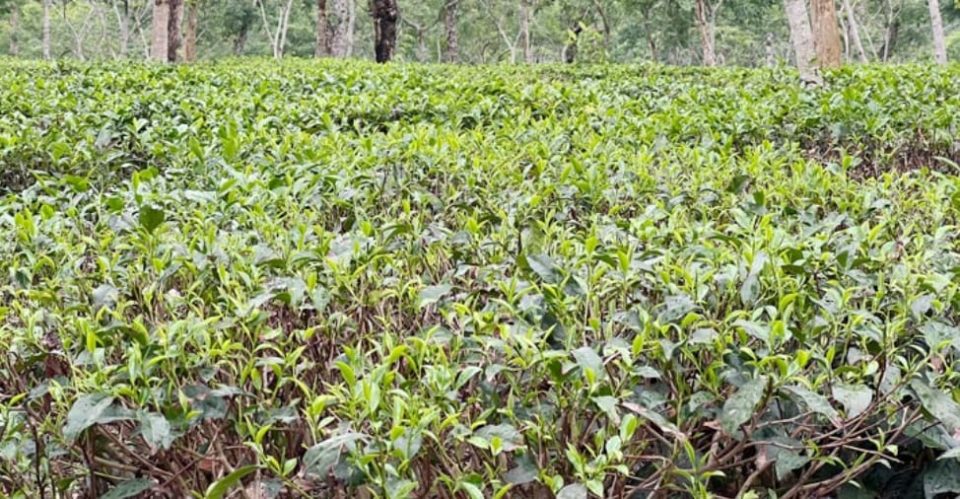
A F M Asad Ullah: The tea gardens of Moulvibazar had been suffering under continuous scorching heat for several days. Most of the tea plants had lost their vibrancy, and red blight disease had begun spreading in many areas, reducing tea production. However, after three to four days of rainfall, the tea gardens have revived, with new buds and green leaves sprouting. The first rain of the tea production season has encouraged fresh leaves to emerge, bringing back vibrancy to the gardens. Consequently, artificial irrigation is no longer necessary to protect the gardens.
According to the Tea Board, this year’s tea production target is set at 103 million kilograms. In 2023, tea production reached 103 million kilograms, but in 2024, it dropped to 93 million kilograms, which was 10% below the target.
At the beginning of the season, there were concerns about tea production being disrupted due to drought. Since early March, new tea leaves began appearing in various gardens of the upazila.
Around four months ago, garden authorities started pruning the sections of the tea gardens. As a result of pruning, the gardens appeared barren and dry. When temperatures exceeded tolerable limits, garden-related stakeholders faced challenges. Due to the lack of rainfall, the dry gardens barely showed signs of new leaves. Moreover, pest infestations increased, affecting the few buds and leaves that existed. Finally, the much-needed rain has brought relief to garden authorities and workers.
Shafiqul Rahman Munna, DGM of National Tea Company, said, “The rain has breathed new life into the gardens. If the desired rainfall continues, we anticipate good yields, and for now, artificial irrigation won’t be necessary. However, the intense drought at the beginning of the season has caused significant damage. We will continue our efforts to recover from the losses.”
GM Shibli of Finlay Tea’s Baraura Division said, “The tea gardens were burning under the severe drought. We were worried about meeting the season’s production target. However, the recent rains have been favorable. If we had implemented irrigation projects earlier, production could have been stabilized from the start of the year.”
Dr. A K M Rafiqul Haque, Director of the Project Development Unit of the Bangladesh Tea Board, stated, “The tea industry is a vital driver of the country’s economy. This year’s tea production target is 103 million kilograms. While the season started with a drought, the onset of rainfall has brought relief. Although production has been somewhat disrupted, the rest of the season will provide opportunities to recover.”
He added, “To protect the plants from dying during droughts, we advised garden authorities to plant shade trees, prune young tea plants, and apply water hyacinth at the base of the plants. Without these measures, disasters cannot be avoided. Preparing in advance each year can help mitigate these challenges.”

