

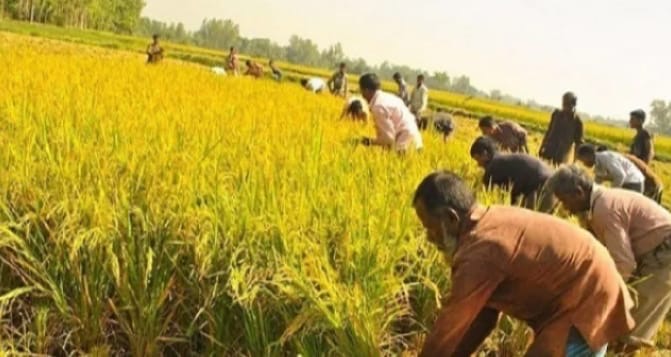
District Correspondent, Sylhet: Farmers in the haor areas of northeastern Bangladesh, particularly in Sunamganj district, face the threat of early flooding to their ripe Boro paddy. According to the latest data from the Bangladesh Meteorological Department and the Water Development Board, rainfall activity is increasing in the Surma, Kushiyara, Bhairab-Kulaura, and Meghna-Baulai river basins. This could lead to a rapid rise in river water levels within the next seven days, posing a serious threat to the Boro paddy in the haor region.
On Tuesday, Md. Imdadul Haque, Executive Engineer of Sunamganj Water Development Division-2, issued an urgent notice urging farmers in the haor areas to harvest their ripe Boro paddy as soon as possible.
According to the Department of Agricultural Extension, the target for Boro cultivation in this season was set at 223,410 hectares in 137 small and large haors across 12 upazilas of Sunamganj district. However, actual cultivation exceeded the target, reaching 223,502 hectares. The production target is approximately 1,396,080 tons of paddy, valued at an estimated Tk 5,280 crore.
Acting Deputy Director of the District Agricultural Extension Department, Mostafa Iqbal Azad, stated that 8.1% of the paddy fields have already been harvested. A total of 160 combined harvester machines, 15 reapers, and 73,000 workers are engaged in harvesting the paddy in the haor areas. He added that if everything goes well, this vast amount of paddy will be safely stored by farmers. To ensure uninterrupted harvesting, the Agricultural Department has issued a notification canceling all leave for its officials at every level.
The notice provided multiple directives to facilitate paddy harvesting. These include mobilizing sufficient workers and mechanized harvesters, ensuring necessary equipment and logistical support, raising awareness through miking, and coordinating efforts with the Agricultural Department and Upazila Administration.
Instructions were also given to prepare essential materials like polythene or tarpaulin for preserving the harvested paddy. Additionally, immediate action has been advised based on the current forecasts of rainfall and rising river water levels.
Based on past experiences, early floods in late April have often caused significant damage to haor crops. This year’s warning has caused concern among farmers, but the relevant departments have reported active measures in the field.

