

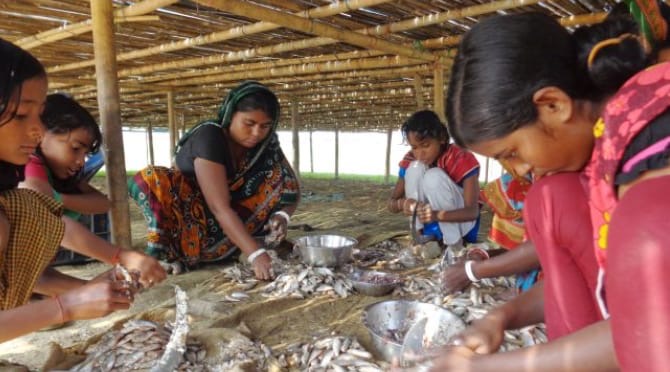
A F M Asad Ullah Asad: Dried fish producers in Habiganj district are facing a crisis due to a sharp decline in the fish population in natural waterbodies such as haors, beels, and rivers. Previously, about 150 species of fish were found in these waterbodies, but now only 20 to 25 species remain. The disappearance of many fish species has resulted in a shortage of raw materials needed for dried fish production, leading to decreased production and despair among producers in the district.
Despite these challenges, over 500 families in the upazilas of Ajmiriganj, Baniachang, Lakhai, Bahubal, Habiganj Sadar, and Nabiganj remain involved in dried fish production. These families have sought government assistance to sustain their livelihoods. Numerous drying platforms are located in haor areas such as Baghata, Gazipur, Shantipur, Bhatipara, Sunaru, Nagura, Noagaon, Noagarh, Birat, Kodalia, Badalpur, and Umednagar.
On these platforms, dried fish is produced from local species like puti, shrimp, kakia, shoil, gozar, taki, baim, air, mola, and tengra. The dried fish is sold in wholesale markets for 15,000 to 20,000 taka per maund. Traders then sell the fish at prices ranging from 25,000 to 28,000 taka per maund, while retail prices range from 700 to 1,500 taka per kilogram, amounting to 28,000 to 60,000 taka per maund.
While producers are struggling to make a profit, wholesalers, traders, and retailers are benefiting significantly. Consumers, in turn, are paying much higher prices. At the same time, dried fish production continues to decline.
According to the District Fisheries Department, the previous fiscal year saw 240 tons of dried fish produced in Habiganj Sadar, 575 tons in Baniachang, 27 tons in Nabiganj, 212 tons in Bahubal, 231 tons in Lakhai, and 342 tons in Ajmiriganj upazilas. This marked a 5% decline compared to the previous fiscal year. Production has dropped even further this season. Habiganj’s dried fish is known for its chemical-free processing, giving it a distinctive taste and value, but both producers and consumers are now facing disappointment.
Producers like Madhabi Rani, Ashulata Rani, Sajala Rani Dash, Parul Rani Dash, Mizan Mia, Bhindraj Mia, and Alfu Mia explained that they purchase fish such as shoil, baim, puti, and tengra at high wholesale prices to produce dried fish. However, reduced water levels in haors, beels, and rivers have made it difficult to procure fish in adequate quantities, and prices for available fish are soaring.
They also noted that the number of wholesale dried fish markets in Umednagar, which used to operate eight times a month, has now dwindled to just four times a month.
Dried fish workers stated that they earn a monthly wage of 10,000 taka, working five hours daily starting at 6 a.m. However, declining production has made it increasingly difficult for them to sustain their livelihoods, prompting many to consider alternative professions.
A market survey revealed that wholesale buyers from districts like Tangail, Sirajganj, and Manikganj visit Habiganj to purchase its renowned dried fish. However, they are struggling to find enough dried fish to meet their demand.
Masudur Rahman, a wholesale buyer from Sirajganj, shared his concerns, saying, “I used to visit Habiganj 7 to 8 times a month to buy dried fish, but now I only come 2 to 3 times a month due to the lack of supply. Prices are also significantly higher than before. Additionally, transportation costs have increased. As a result, many traders are losing interest in this business.”
Kamrul Islam, a wholesaler at Umednagar market, stated, “Previously, this market had a variety of dried fish, attracting buyers from across the country. Our dried fish is known for its exceptional taste and quality. However, the decline in fish population in haors, beels, and rivers has reduced dried fish production.”
Tofazzal Sohel, General Secretary of the Bangladesh Environmental Movement (BAPA) Habiganj branch, said, “The district has numerous rivers, beels, haors, and extensive waterbodies. However, polluted water from various industries and the excessive use of pesticides on agricultural land are harming these natural waterbodies. Additionally, many waterbodies are being filled in. As a result, the fish population in natural waterbodies has drastically declined, leading to a drop in dried fish production. Previously, these waterbodies were teeming with numerous indigenous fish species, supporting substantial dried fish production.”
He added, “The authorities must act responsibly and urgently; otherwise, indigenous fish species will gradually disappear from natural waterbodies, ending dried fish production as well.”
District Fisheries Officer Mohammad Wahidur Rahman Mazumdar stated, “Dried fish production in Habiganj has been steadily declining, leading many to lose interest in this profession. We are conducting operations to increase fish production in the haors, especially to protect fish fry. If we can ensure the protection of fish fry, fish production will increase. Our campaigns against harmful fishing nets like Chinese fishing nets and current nets are ongoing. Preserving river fish will help boost dried fish production.”

