

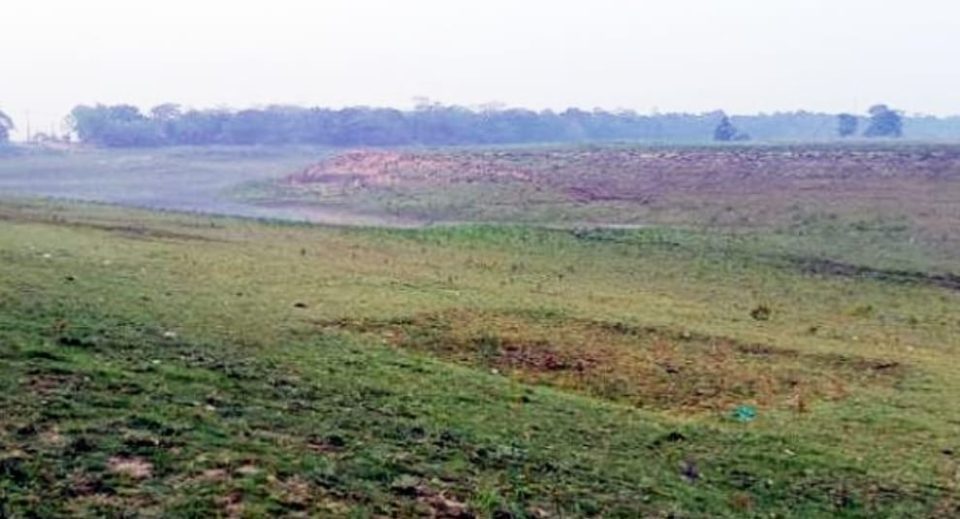
A.F.M. Asad Ullah: The river shown in the picture is one of the lifeless rivers of Sunamganj, known locally as Puratan Surma (Old Surma). This 45-kilometer-long river originates from the Surma River in the district headquarters, flows through the Shantiganj upazila, and merges into the Kalni River in Dirai upazila. Once a strong-flowing river, it has now turned into barren land. The riverbed has filled up with sediment carried from upstream. Farmers now cultivate rice in areas where large launches once navigated. The river, which required boats to cross year-round, can now be crossed on foot in many places.
This scenario is not unique to the Puratan Surma. Most rivers in the district, including the Surma, Kushiyara, Dauki, Kalni, Jadukata, Rakti, and Boulay, have lost their vibrancy due to sedimentation. This state of the rivers highlights the deteriorating condition of rivers and wetlands in Sunamganj, a district known for its rivers and haors.
According to the Water Development Board, there are approximately 106 small and large rivers across the 12 upazilas of Sunamganj, along with hundreds of canals. The department reports that nearly all rivers in the district have faced sedimentation, with 19 rivers being the most severely affected. The riverbeds have been filled with sediment brought by upstream floods, significantly altering their shapes each year.
Environmentalists attribute the sedimentation of rivers primarily to disruptions in their natural flow, causing silt to accumulate on the riverbeds, along with various forms of pollution. Experts believe that unplanned construction of dams and infrastructure in haor regions, encroachment, pollution, and inadequate river management and preservation are major causes of river sedimentation. Consequently, dry season navigation has been hampered, irrigation water for agriculture has become scarce, fish reproduction has been disrupted, and the supply of potable water has decreased. The increased frequency of floods and environmental disasters have further compounded the problem. Experts emphasize the need for dredging rivers during both the rainy and dry seasons to maintain navigability, adopting planned and eco-friendly development projects, and proper maintenance of rivers.
Dulal Mia, General Secretary of Bangladesh Paribesh Andolon (BAPA), stated, “All rivers in Sunamganj are under threat of sedimentation, which poses a grave warning for haor residents. Sedimentation has left Sunamganj vulnerable to annual floods. To mitigate the long-term adverse effects of sedimentation, a comprehensive master plan is urgently required. Planned dredging from the source to the estuary of the Surma River is essential. The flow of river water must not be obstructed. If sediment from upstream is not removed, it will affect other rivers. Most rivers in the district are already filled up. Large-scale dredging projects are needed, and unplanned dam construction must be stopped. Proper enforcement of laws for river governance and maintenance is critical.”
Meanwhile, the Water Development Board has initiated a master plan for dredging the silted rivers in the district. A project worth 2,000 crore BDT for dredging 19 rivers has been submitted to the Planning Ministry.
However, due to the high project cost, further evaluation is being conducted, said Mamun Hawlader, Executive Engineer of the Sunamganj Water Development Board. He expressed hope that the project would be approved within the next two months, enabling the dredging work to begin.

